
Abrasive product range
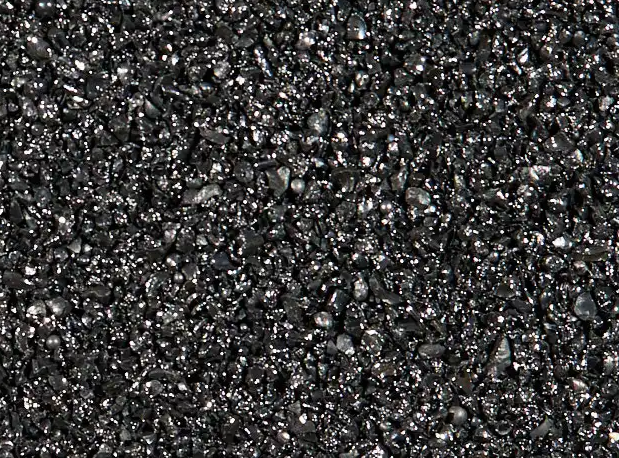
Copper Slag
Copper Slag is a highly effective, expendable synthetic mineral abrasive widely used in open nozzle blasting applications. Favoured for its fast cutting action and high productivity, it provides excellent surface preparation for coatings and corrosion removal. Available in a wide range of grades, Copper Slag can be tailored to suit most blasting requirements, with custom grades available for specialist applications and performance demands.
The Moh hardness is 7-8 which ensures fast easy removal of rust, mill scale and old paint coatings from steel to the highest standards of cleanliness (Sa 3).
DurableThe low shatter index ensures efficient energy transfer to the work surface. Scangrit iron silicate abrasive is able to clean without excessive particle breakdown so reducing the quantity of dust generated during blast-cleaning.
Fast
The sharp cutting edges rapidly remove paint corrosion and mill scale. Scangrit grade 3 is capable of cleaning to Sa 2½ at rates of up to 10 - 12 m2/h.
Clean
A unique fuming process removes lead and other heavy metals to very low levels. Water soluble chloride and other salts are well below the levels prescribed in ISO 11126-3.
Low dust
Scangrit iron silicate abrasives are air-washed to remove dust and fines. The typical fines content of Scangrit Grade 3 is less than 2% below 200 microns. The ISO 11126 series of standards permit up to 5% below 200 microns.
Standard grades- Grade 2 0.2 - 0.85 mm
- Grade 3 0.2 - 1.7 mm
- Grade 4 0.5 - 2.0 mm
- Grade 5 0.2 - 2.5 mm
- Grade 6 0.5 - 2.5 mm
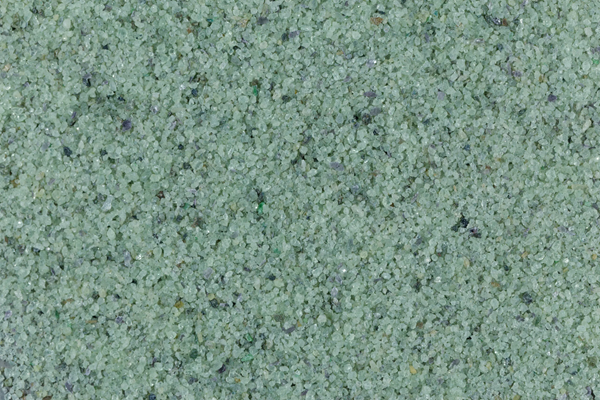
Olivine
Olivine is a natural mineral abrasive containing no free silica, making it a safer and environmentally responsible choice for many blasting projects. It is particularly well suited for cleaning brick, stone and masonry surfaces, offering excellent results without excessive damage to the underlying substrate. Various grades are available, from architectural concrete finishing to the careful restoration of historic stonework, monuments and sculptures.
Hard
The Mohs hardness is greater than 7, Olivine is thus capable of producing an Sa3 finish on steelwork.
Dense
The high apparent density ensures that the particles impacting on the surface have a high energy to facilitate dirt and scale removal.
Sharp
The angular particle shape provides a rapid cleaning action on all types of substrate.
Non-metallic
Finer grades of Olivine are suitable for use on stainless steel and non-ferrous metals for example aluminium.
Safe
All the silica is present in a combined form and therefore Olivine does not present a silicosis hazard.
Eco-friendly
Olivine is an inert and non-toxic naturally occurring mineral abrasive which has been approved in many areas as suitable for use over rivers and watercourses. Furthermore, the pale green colour is found to be less objectionable than mineral slag abrasives for instance which tend to be dark in colour.
Standard Grades
- Medium 0.2 – 1.0 mm Cleaning stone and brickwork, removing laitance from concrete. Cleaning stainless steel and special alloys to provide a fine profile prior to coating application or a decorative satin finish.
- Fine 0.125 – 0.50 mm Cleaning of very fine or intricate stonework, graffiti removal, removal of weld stain from stainless steel food and brewery vessels.
- Extra Fine 0.09 – 0.25 mm Restoration of the finest stonework and sculptures in both stone and metal.
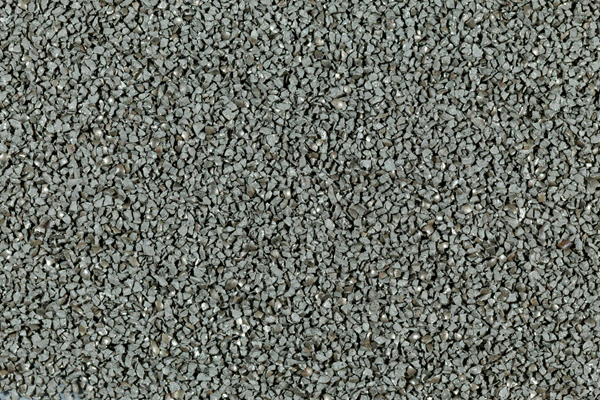
Chilled Iron
Chilled Iron is an extremely hard, recyclable abrasive designed for demanding industrial cleaning applications. As the particles impact the surface, they fracture to reveal fresh, sharp cutting edges, maintaining aggressive cleaning performance throughout the blasting process. It is commonly used in closed-circuit, air-propelled blasting systems where fast cleaning rates and abrasive recovery are important.
Hardness
Chilled iron grit is very hard - 700 800 HV1, 60.1 - 64.0 HRC.
Durable
The relatively moderate breakdown rate results in an approximate consumption rate of 0.5 Kg/m2. Regular top ups with fresh abrasive to maintain a working mix result in an effective recyclability of 10 cycles.
Dense
Chilled iron has a high apparent density resulting in high impact energy.
Sharp
The initial particle shape is angular. In use, the multi-faceted sharp angular surface is maintained which produces a clean sharply etched surface texture which is ideal for subsequent coatings, particularly those that demand excellent adhesion characteristics such as metal sprayed coatings.
Fast
Chilled iron grit is very aggressive and ideally suited to rapid cleaning of rust and scale.
Grade, particle size and profile
- G39 1.00 - 1.60mm Coarser than coarse (100 - 130 µm)
- G34 0.80 - 1.25 mm Coarse (90 -120 µm)
- G24 0.60 - 1.00 mm Coarse (80 - 110) µm)
- G17 0.40 - 0.80 mm Medium (65 -95 µm)
- G12 0.30 - 0.60 mm Medium (50 - 70 µm)
- G05 0.20 - 0.40 mm Fine (30 - 40 µm)
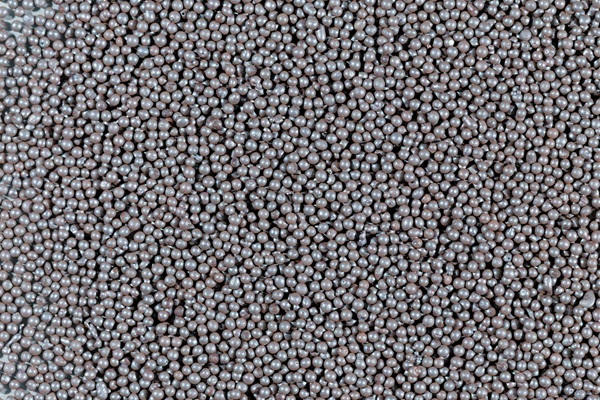
Steel Shot & Steel Grit
Steel Shot and Steel Grit abrasives are widely used in enclosed blasting systems and wheel-blast equipment. Manufactured from high-carbon steel, these durable abrasives provide excellent cleaning, descaling and surface profiling capabilities. Available in a variety of sizes and hardness grades, steel abrasives are suitable for applications ranging from rust and coating removal to surface preparation prior to painting, coating or galvanising.
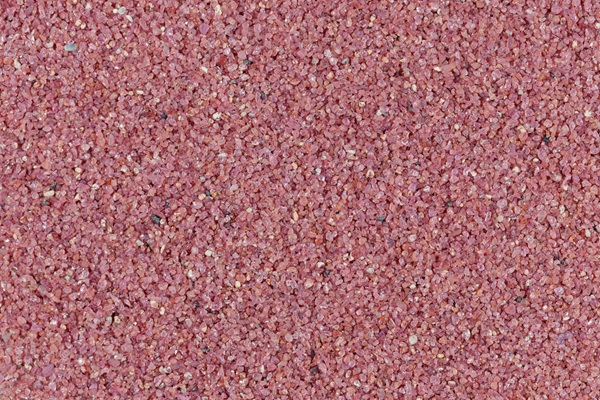
Garnet
Garnet is a hard, durable natural mineral abrasive renowned for its low dust generation and high cleaning efficiency. It delivers excellent coverage rates and consistent surface profiles, making it ideal for stainless steel, aluminium and specialist alloy applications. Coarser grades can often be recycled multiple times, offering greater economy, while finer grades are widely used in precision waterjet cutting operations.
Hard
The Mohs hardness of 7 – 8.
Durable
Demonstrates relatively high resistance to shatter, promoting high energy transfer to surface and low dust generation.
Dense
The high specific gravity (4.0-4.1) ensures that the particles impacting on the surface have a high energy to facilitate dirt and scale removal.
Non-metallic
Suitable for use on stainless steel and non-ferrous metals.
Safe
Free silica content of garnet is less than 0.5%.
Eco-friendly
Garnet is an inert and non-toxic naturally occurring mineral. Abrasive consumption is lower than conventional expendable abrasives and coarser grades are suitable for reuse thereby reducing consumption further. Durability of garnet reduces dust generation.
Standard Grades
Grade- 0.60- 1.40mm (12/24#) Removal of heavy coatings. Blasting of mild steel to provide coarse profile. Preparation of stainless steel prior to coating application. Suitable for reuse.
- 0.355 – 0.850mm (20/40#) Blasting of tanks, ships and steel fabrications, where a medium profile is required. Cleaning stainless steel and special alloys.
- 0.200 – 0.600mm (30/60#) Economical blast cleaning of steel where profiles of up to 65 microns are required.
- 0.180 – 0.355mm (80#) Rapid cleaning of steel substrates where a low profile is required. Selective removal of coatings. Water-jet cutting.
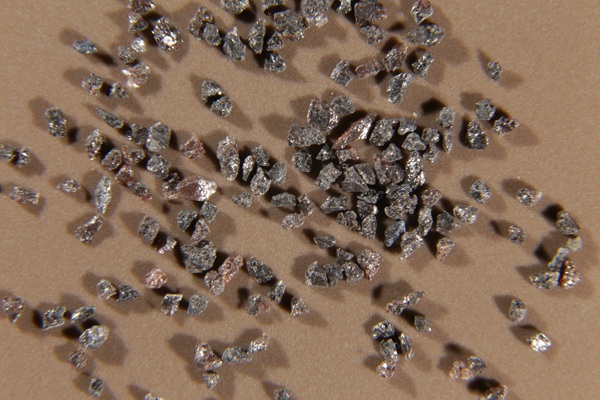
Alumina
Alumina is an exceptionally hard synthetic abrasive offering high durability and precision surface treatment. Commonly used within blast cabinets and controlled blasting environments, it is ideal for cleaning non-ferrous metals, preparing stainless steel surfaces and creating uniform surface profiles. It is also widely used for engraving and decorative etching on materials such as marble, granite, slate and glass, with white alumina providing particularly attractive decorative finishes.
Hard
With a Moh hardness of 9 fused aluminium oxide is one of the hardest abrasives available.
Durable
Fused aluminium oxide exhibits relatively high resistance to shatter promoting high energy transfer to the surface and low dust generation.
Dense
The high apparent density ensures that the particles impacting on the surface have high energy.
Sharp
The irregular angular particle shape provides a rapid cleaning action on all types of substrate.
Non-metallic
Suitable for use on stainless steel and non-ferrous metals. For critical applications white fused alumina may be specified.
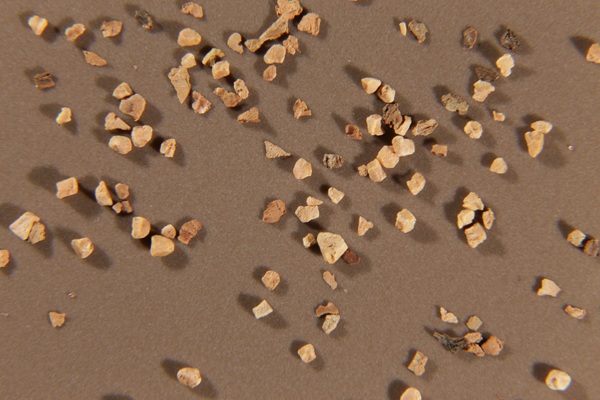
Walnut shell
Walnut shell blasting media is a natural, eco-friendly, organic blasting material made from crushed walnut shells. The gentle cleaning action makes it ideal for delicate applications where the surface must not be damaged or where material removal must be kept to a minimum. Typical uses include decarbonisation, mould and die maintenance , engine component cleaning, turbine blade cleaning and other sensitive restoration processes.
The Moh hardness of walnut shells is 3-4. Walnut shell media is well suited to cleaning steel substrates without scratching or dimensionally altering the surface.
Durable
The media does not readily breakdown on impact and produces little dust in use.
Density
The low apparent density ensures that the impact energy is low and and the risk of warping of light gauge metal panels is minimised.
Environmentally friendly
It is a naturally occurring by-product which is both biodegradable and non-toxic.
Standard grades
No 1 0.75 - 1.70 mm (8/16), coarse
No 3 0.50 - 1.40 mm (16/5), medium
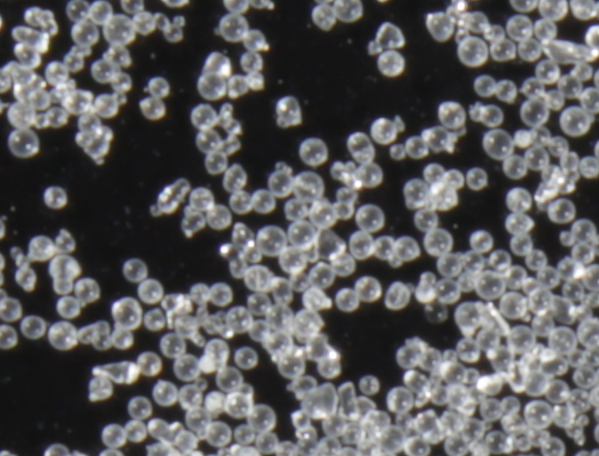
Glass Bead
Glass Beads are highly versatile abrasives used across a broad range of cleaning, finishing and surface enhancement applications. They provide a smooth, bright finish while minimising material removal, making them ideal for deburring, deflashing, decarbonising, shot peening and mould cleaning. Glass bead blasting is particularly popular where a decorative satin finish or precise surface treatment is required.